Friday, 3 March 2017

P1 E


P1 E- Legal and Ethical issues involved in Social Media

Using Social Media and social networking sites such as Facebook and Twitter can be a great way for people to interact and communicate with others online. However, what is shared on social media could be viewed as ‘defamatory’, meaning that you could be damaging someone’s reputation. Because of this, several companies work on dealing with the Legal and Ethical issues which may arise when using social media in today’s society.


Libel

Libel is a company which explores the legal viewpoint of material which can be seen as offensive or damaging to another person on social media. This also includes exploring material which can be seen to be damaging another person’s reputation. An online comment, such as a tweet, may expose someone to hatred, ridicule or contempt. It is a civil offense, meaning you cannot be arrested for this although you may be asked to pay a large fine in return. Such rules may apply to a ‘retweet’, which means that although you aren’t responsible for making the original allegation, retweeting it could be seen as an endorsement. Doing so may result in you being accused of making a defamatory statement for instance, and you could be sued.


Copyright

Copyright is the legal ability to copy something online; this is the legal term to describe a person’s ownership of their creative “works”. Any original piece which is created online such as a piece of writing, music or artwork is protected by Copyright Laws. Copyright protects the way an idea is expressed without including the basic idea itself. For instance, you may write a song as someone else on the same topic but you cannot copy their lyrics or tune.

Copyright protection is automatic

This means that if you were to share something online, you have the copyright for such work. Because it is automatic, it isn’t necessary to put the Copyright symbol on your work in order for you to have cover.

If you are found breaking the Copyright law online, penalties may apply. This includes the Copyright owner’s right to try and take you to court in order to receive money for your use of their Copyright material. In certain extreme circumstances, breaking a Copyright law can be considered a crime and you may need to pay a fine or even go to jail. However, criminal penalties generally apply to companies who break the Copyright law specially to copy music, videos and certain computer software.


Intellectual property rights

As Social Media is increasing rapidly online, it has become even more important for businesses to protect their intellectual property (IP) and look to address all such violations of IP and other rights that take place on varied portals such as Twitter, Facebook and YouTube. It is now allowed on the internet to share content on a worldwide basis within minutes, so what was once yours and within your own ownership, could tomorrow go viral and be shared internationally without your permission or credits.


Copyright and Trademarks

Even for companies that acquire legal ownership of logos, names and business phrases, they need to make sure that the sectors for which they have secured exclusivity, their content is not being used elsewhere on websites, tweets, updates, videos and many other internet / social channels. It is useful to regularly check for your content online and on social media platforms and collate evidence if anything suspicious is found.


Bullying and Stalking Online

Cyber bullying can occur online by bullies known to you or through anonymous accounts which may depend on the channels they use. Usually leads to others being persuaded into joining in with the abuse. It is tough to stop Cyber bullying online once it has begun and even harder if the accounts presented are anonymous, meaning you are unable to track down the person behind the bullying and put a stop to it. This means you should consider different ways to make your information or accounts online private, so that people you don’t know are unable to view your content such as photos of you.

 An example used to illustrate this can clearly be found in the source below. This discovers a severe case of harassment and stalking which has previously been found to occur online.


Don’t reveal too much information

When online you should be cautious about the information you are sharing with people, such as providing any personal or private details such as email addresses. This is especially important if you are using social media sites online as your identity and personal information are valuable to criminals. For instance, if they get hold of this information, they may be able to apply for products or services in your name if they hold a copy of your identity for example.


Impersonating others

Impersonating others is a serious problem online, particularly on social media. Most social media sites and other websites have anti-impersonation policies and it is therefore possible to have fake pages removed, however, often it is more serious.

Many people overshare their own private information on websites such as Facebook, Twitter and Instagram. Whilst inadvisable it is not unlawful to breach your own privacy. Where an impersonator does so, however, a claim for misuse of private information is available.

Defamation is where impersonation happens then false information and statements are automatically made. Provided some of those statements are defamatory – i.e. they tend to lower the victim in the eyes of right-thinking members of the public – then a claim in defamation is made out.
Illustrated below are the clear disadvantages of impersonation online. Therefore it is clear how this issue still exists throughout social media today, despite the several ways to avoid this issue being enhanced to users often.
Source: https://nobullying.com/impersonation/

P1 D


P1 D- Sources of Revenue in Social Media


Pay-Per-Click Advertising

‘Pay per click’ is an internet advertising model which is used to direct traffic to websites, in which an advertiser pays a publisher when the ad is clicked. This is used greatly through social media sites such as Facebook, Twitter and Instagram as it is an easy way to target people’s accounts and persuade them into buying products from their complete interest. For instance, if someone had posted through their Facebook account about an interest in the fashion industry, Advertisers may use this as a skill to post products of a similar interest onto that person’s wall. This is usually very successful, although some people are still unaware that this is happening to them.

Pay per click is commonly associated with first-tier search engines such as Google and Microsoft Bing Ads. With search engines, advertisers typically bid on keyword phrases that are relevant to their target market. In contrast, content sites commonly charge a fixed price per click rather than use a bidding system.


Impression Advertising

Impression advertising is when an ad is fetched from its source, and is countable. This means that whether or not the ad is clicked is not taken into account. Each time an ad is fetched, it is counted as one single impression. Counting impressions is the method by which most Web advertising is accounted and paid for, and the cost is quoted in CPI (cost per impression).

Image result for impression advertising social media


Above is a graph to show the top categories by % share of display ad impressions. It is clear how this is used generally through Social Media, as it is ranked 33% on the graph.


 Banner Advertising

banner, or display advertising, is advertising on websites. This includes many different formats and contains items such as text, images, audio, flash and video. The main purpose of display advertising is to deliver general advertisements and brand messages to site visitors.

According to Emarketer, Facebook and Twitter will take 33% of display ad spending market share by 2017. Also, desktop display advertising has eclipsed search ad buying in 2014, with mobile ad spending to overtake display in 2015.


Image result for facebook ad
Above I have added a screen shot to illustrate the use of Banner Advertisements. It is clear on this how the social media site Facebook is being used for advertisements to be featured on the page. This is clearly to deliver clear advertisements across to social media users as a way of gaining more consumers.


Image result for googlr ad
Demonstrated above is a screenshot of when a Pay- Per Click advertisement is being used through Google. This is clearly an easy way for a company to make money, as consumers are often tricked into paying for things they are unaware of. As shown in the screenshot, this is commonly associated with first- tier search engines such as Google.

P1 C


P1 C- Target User/ Membership

 
Below I have investigated the target audiences of several social media accounts, i.e. Facebook, Twitter and Instagram. 


Facebook

Over recent years there has been a spike in the amount of older people who are using Facebook, compared to when the app first started. Facebook has recently seen a lot of its younger audiences move more towards other apps, such as Instagram, Twitter and Snapchat.

Despite this view, it is seen by most people that Facebook’s current target audience are middle-aged adults who are not currently in employment. Facebook is popular among those in rural, suburban and urban areas, along with those who are of various ethnic backgrounds.

Facebook has the most engaged users; 70% log on daily, including 43% who do so several times a day.


Twitter

Over recent years there has hardly been a change to the way in which news is distributed on Twitter. The microblogging site allows users to keep up with events in a real-time news feed and charges advertisers to promote their targeted messages. Of Twitter’s 271 million active users in 2014, 95 million were between the ages of 18 and 29. The site is also popular with older adults, with 54 million users between the ages of 30 and 59, and 44 million over the age of 50.

It is shown in a recent study how internet users living in urban areas are more likely than suburban or rural counterparts to use Twitter. Three out of 10 online urban residents use the site compared with 21% of suburbanites and 15% of those living in rural areas. The majority of regular Twitter users are male, while females tend to gravitate toward Facebook and Instagram. Twitter is more popular than other sites with the more affluent. The percentage of users with college educations and incomes over $50,000 is much higher than those of Facebook or Instagram. Twitter users are also quite diverse, with 20% of online Caucasians and 28% of online blacks and Hispanics being regular visitors.


Instagram

While the number of online American adults using Instagram doubled from 2012 to 2015, the photo- and video-sharing network has become completely entrenched in the lifestyles of younger Internet users. The migration of youth from Facebook to photo-sharing social networking sites such as Instagram explains why 53% of its 200 million active users are between the ages of 18 and 29, most of whom are on the platform daily.

Over half of American teens and people in their early 20s are on Instagram, and it is even more heavily used among higher-income youth. Americans in this demographic rely heavily on mobile devices, and posts to Instagram can only be made using one, adding to its popularity. In its infancy, Instagram was heavily skewed toward female users. As of 2015, many more males have come on board and make up nearly 50% of daily Instagram users.


Source: http://www.investopedia.com/articles/markets/100215/twitter-vs-facebook-vs-instagram-who-target-audience.asp

Thursday, 2 March 2017

P1 B


 P1 B: Content

 
Facebook
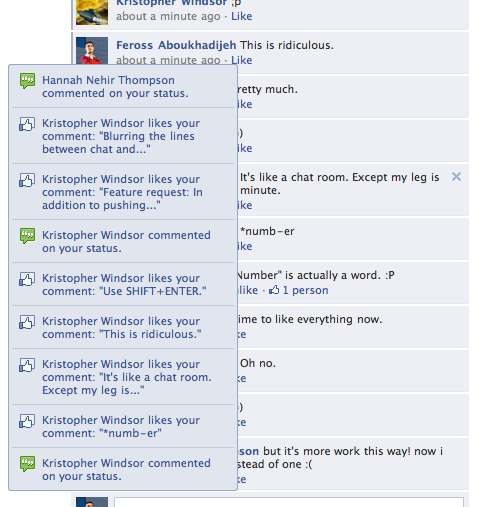
Facebook’s content consists of various ways in which you can connect with others online. For instance, users are able to share their own posts with friends, which can consist of text and images of their choice. Others who are ‘friends’ are then able to ‘like’, ‘react’ or comment on their post, also being given the option to ‘share’ this post on their own timeline for others to see. There is no maximum amount of friends who you are allowed to have through Facebook, although once a request has been sent, the person would then have to ‘accept’ you, in order for you to interact and see each other’s posts.
Image result for like and comment feature in facebook
Image result for like and comment feature in facebookImage result for like and comment feature in facebook


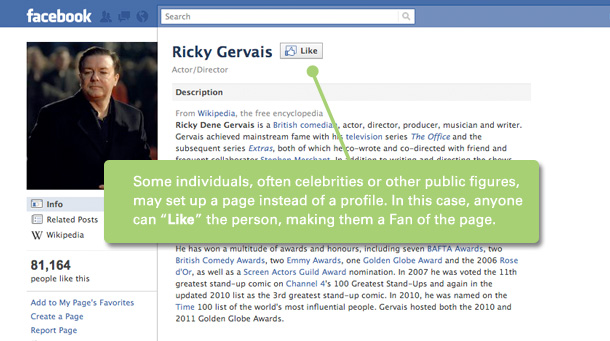
Business and celebrity pages can also be made through Facebook accounts, which allows companies to publicise products and be more open to the public eye. This may further the success of many business’ and companies, as pages can be shared for thousands of people across the world to see.
Image result for business and celebrity pages facebookImage result for business and celebrity pages facebook

Facebook provides games through their site for users to play either themselves, or by sending a request, they can do this through interaction with others. Once a request has been sent, the other person can then decide whether they wish to accept and play, or decline the offer.
Image result for games for facebookImage result for games for facebook
Another way in which people can interact through Facebook, is by sharing videos which have become ‘popular’ in the public eye. This means that if a video has been uploaded, it may have been shared by thousands of people worldwide, and has gained thousands of views as a result. This can bring people together as a result, due to the idea that people are able to comment back to each other with perhaps their opinion on the video, and are interacting as a result.

The USP
Below are some of the traits which present how Facebook differs to other social media accounts.
Facebook uses emotional bonding to help people stay connected over Facebook with their friends, colleagues, customers, potential customers and fans.
The ‘Like’ feature has made Facebook more engaging, although other social media accounts have now taken this idea also, such as Instagram.
Image result for usp facebook
Twitter
Through social networking service Twitter, users are able to post and interact through messages which are known as ‘tweets’ for each of their ‘followers’ to view. Such posts are restricted to 40 characters, meaning they are only allowed to write a certain amount of information per tweet they share. It is also a requirement to be registered to Twitter before being able to share tweets, as this is unnecessary otherwise.


Image result for tweetImage result for tweet

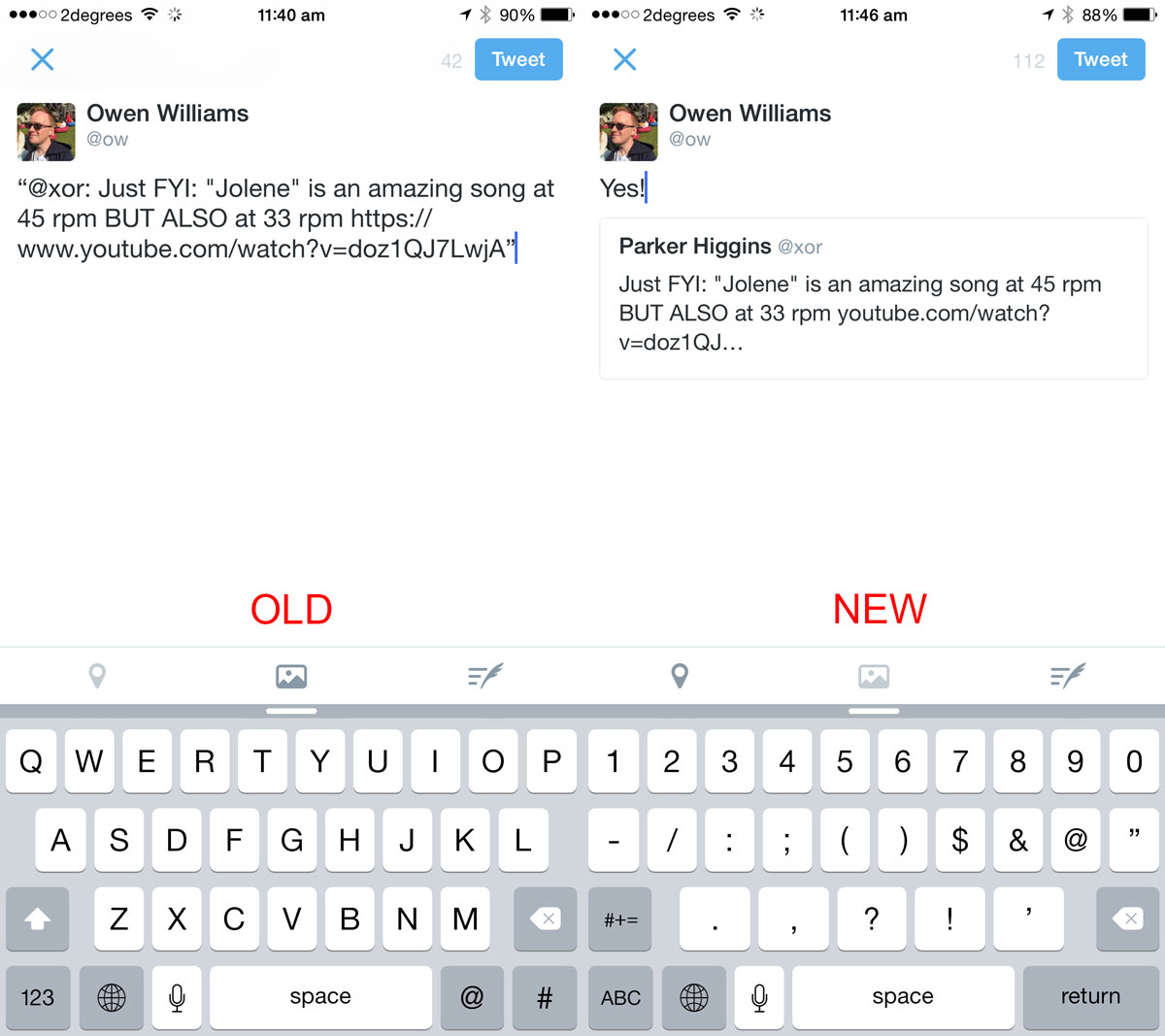
Hashtags are used through Twitter, as a way for users to group together a topic or type of such information or headlines. A hashtag is done using the # sign, whereas the @ sign is used and followed by a username, for mentioning or replying to others in a tweet. To repost a message from another Twitter user and share it with one’s own followers, a user can click the ‘retweet’ button within the tweet.
Image result for hashtags on twitter
A phrase, word or topic that is mentioned at a greater rate than others is said to be a “trending topic”. Trending topics become popular either through a concerted effort by users, or because of an event that prompts people to talk about a specific topic. These topics help Twitter and their users to understand what is happening in the world and what people’s opinions are about it.
Image result for hashtags on twitter
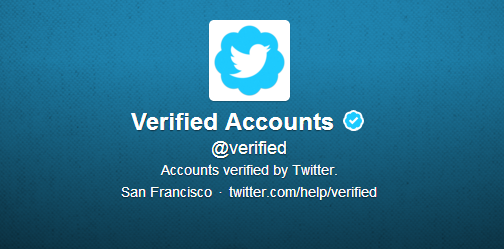
A verified Twitter account formally validates the identity of the person or company that owns the account- the aim of the ‘verified’ status is to prove that a real world person or company is not being impersonated through the placement of a small, blue checkmark by the top right corner of a user’s page, or next to the username in the platform’s Search function.       
   Image result for verified twitter account  Image result for verified twitter account                                              
The USP
Twitter is seen to differ with various other social media accounts due to a crucial design choice Twitter made of limiting the word count in any messages shared very strictly. This simplifies texting and focuses the whole world to think in 140 characters. This choice helps Twitter’s feed to appear more clean.
Instagram
Through Instagram, users are able to upload a standard photo and apply a digital layer which can give it the appearance of professional editing. Some filters enhance the colours in a photo, whilst others can dull the light to a soft glow for an aged, vintage appearance. In order to use Instagram, you are requested to sign up and make your own account. This way, the photos you are uploaded will be under your account name, meaning you will automatically hold a Copyright law for your images. As Instagram is a social app, it is essential that you connect to other social accounts in order to get the most out of the experience. This way each time you upload a photo to Instagram, you’ll have the option to share to each of the social networks you’ve enabled, or to none. If you choose to share to none, the photo will only post to Instagram, being viewable to only the users who are following you on the app.
Image result for instagram accountImage result for instagram account
The main reason that people use Instagram is to share photos online. Once you have chosen a photo to upload, you are then able to choose from 17 famous Instagram filters which add different pre-determined layers to your photos, and give the effect that you’ve altered or professionally edited them. Many filters add “vintage” effects, which have certainly pleased many a hipster.
Whilst sharing your photos on Instagram, people are able to “like” or comment on your post, meaning you are able to interact with your followers in a public way. There is also the choice to use direct messages which alternatively hide your messages from the public so that you can talk to others in a more private way.
 
The USP
Instagram’s unique selling point is viewed by some people to be the fact that it holds so much creativity through a photo sharing platform. For instance, while a status update on Twitter or Facebook can be constantly shared by many people, this can become boring and so Instagram is given the effect of being shown as a more original social
media account.


Source: http://www.investopedia.com/articles/markets/100215/twitter-vs-facebook-vs-instagram-who-target-audience.asp